

Being built in AnkEDGE
Quant trading
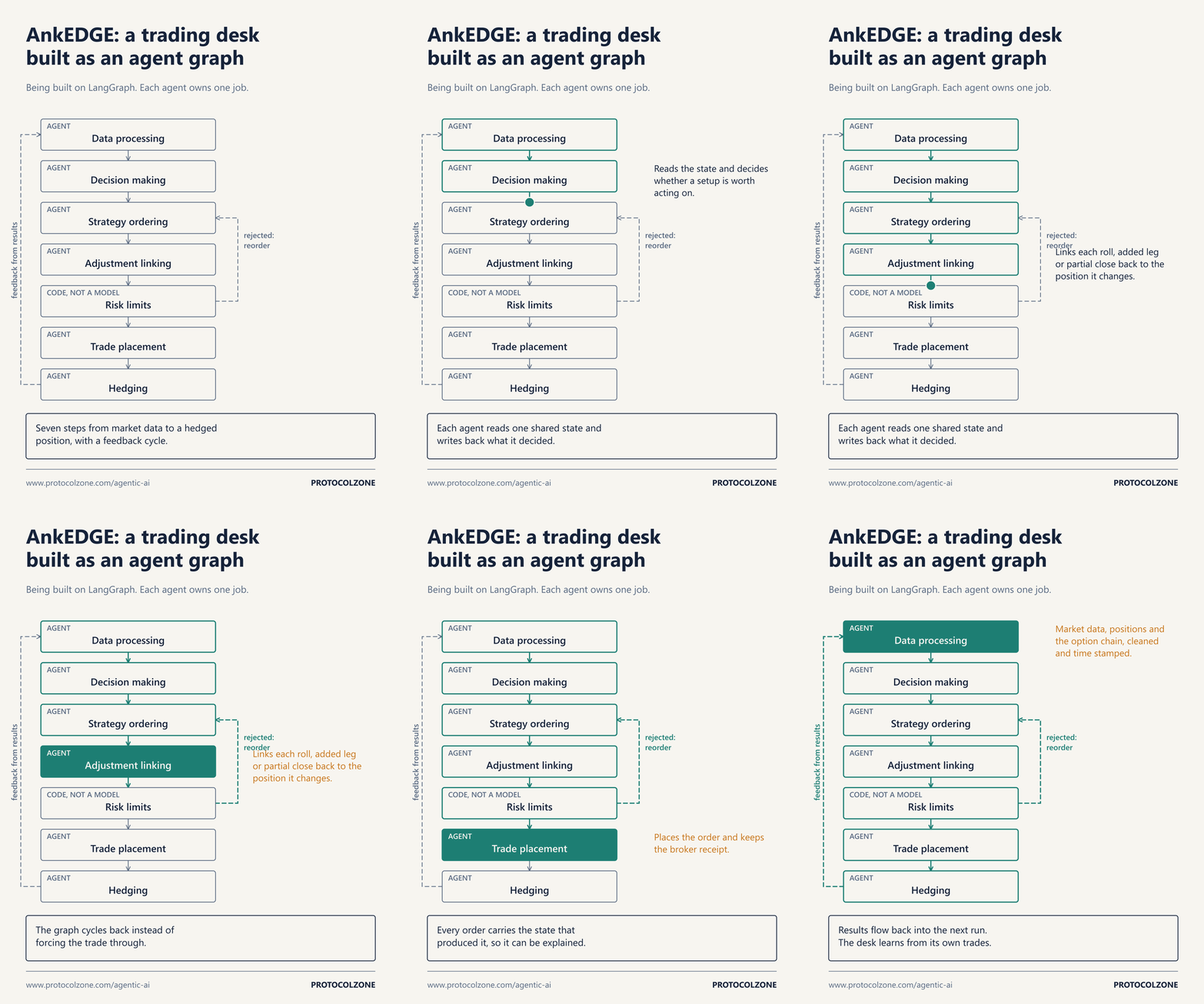
Data processing, decision making, strategy ordering, adjustment linking, trade placement and hedging as agents, with risk limits in code and results feeding the next run.
The trading agent graphAgentic AI · LangGraph · Data to Data
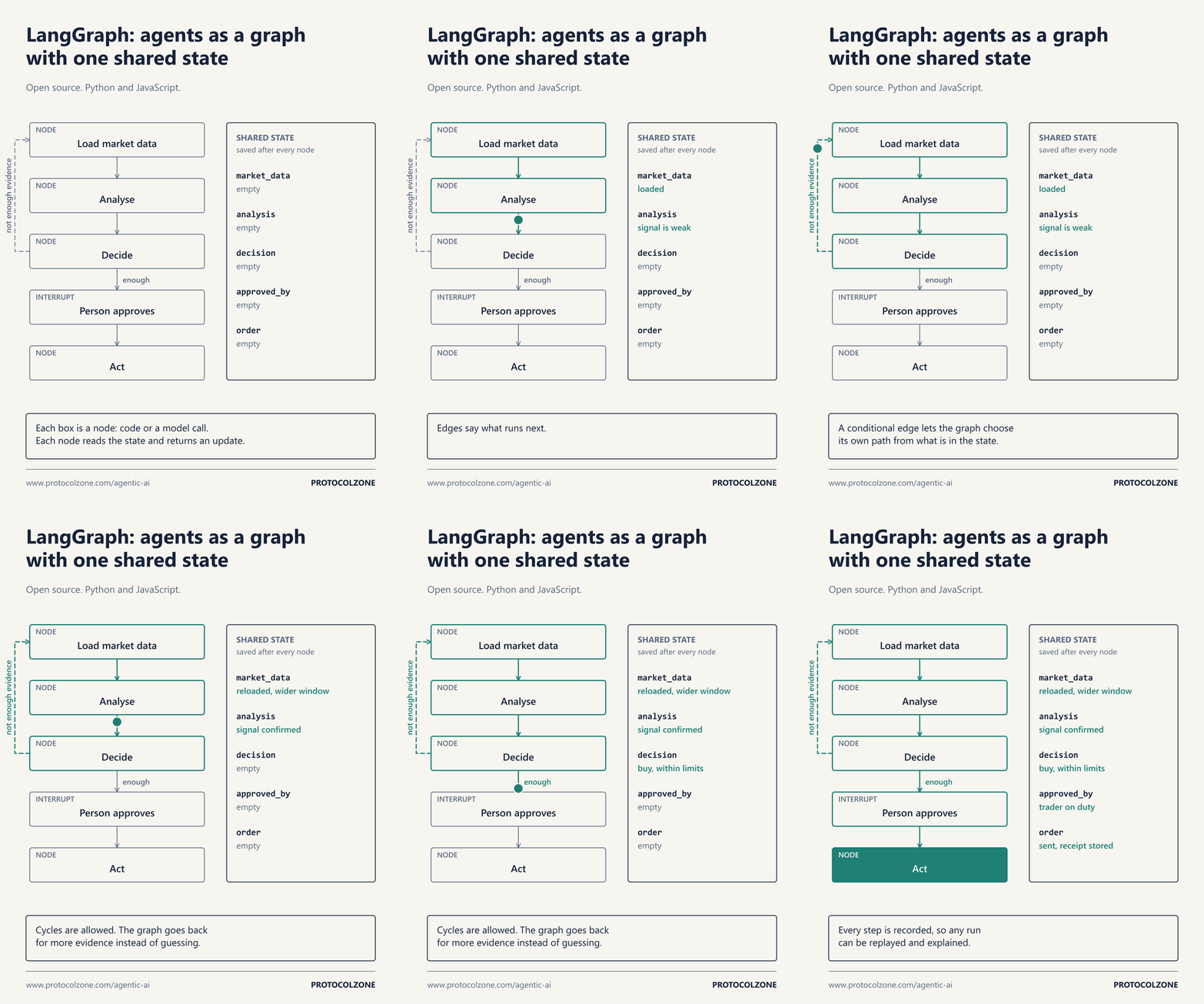
We build multi-agent systems on LangGraph, the open source framework for agents that share one state. Each agent owns one decision, rules that must not bend stay in code, people approve what matters, and every outcome feeds the next run. We are building our own options trading platform, AnkEDGE, this way.
An open source library, from the team behind LangChain, for building applications as a graph of steps. It is not a model and not a strategy. It is the control flow around models and code, available for Python and JavaScript.
Quant trading · in development
AnkEDGE's decision layer is being built on LangGraph. Data processing, decision making, strategy ordering, adjustment linking, trade placement and hedging are agents that share one state. Risk limits sit between them as plain code, and an order that breaks a limit goes back to be reordered rather than forced through.
Fills and position behaviour flow back into the next run, so the desk learns from its own trades. Strategies still pass backtesting and simulation before they reach the graph.
Prediction markets · capability
An agent reads the resolution rules first. Three agents gather news, data and related market prices in parallel. Their evidence becomes one probability with reasons, and plain code compares it with the price after fees.
Usually there is no edge, and the graph logs that. When there is a gap, an analyst reviews the reasoning. Resolved outcomes score every estimate, so overconfidence shows up early. Analysis and review, not a promise of returns.
Prediction market analysis with agents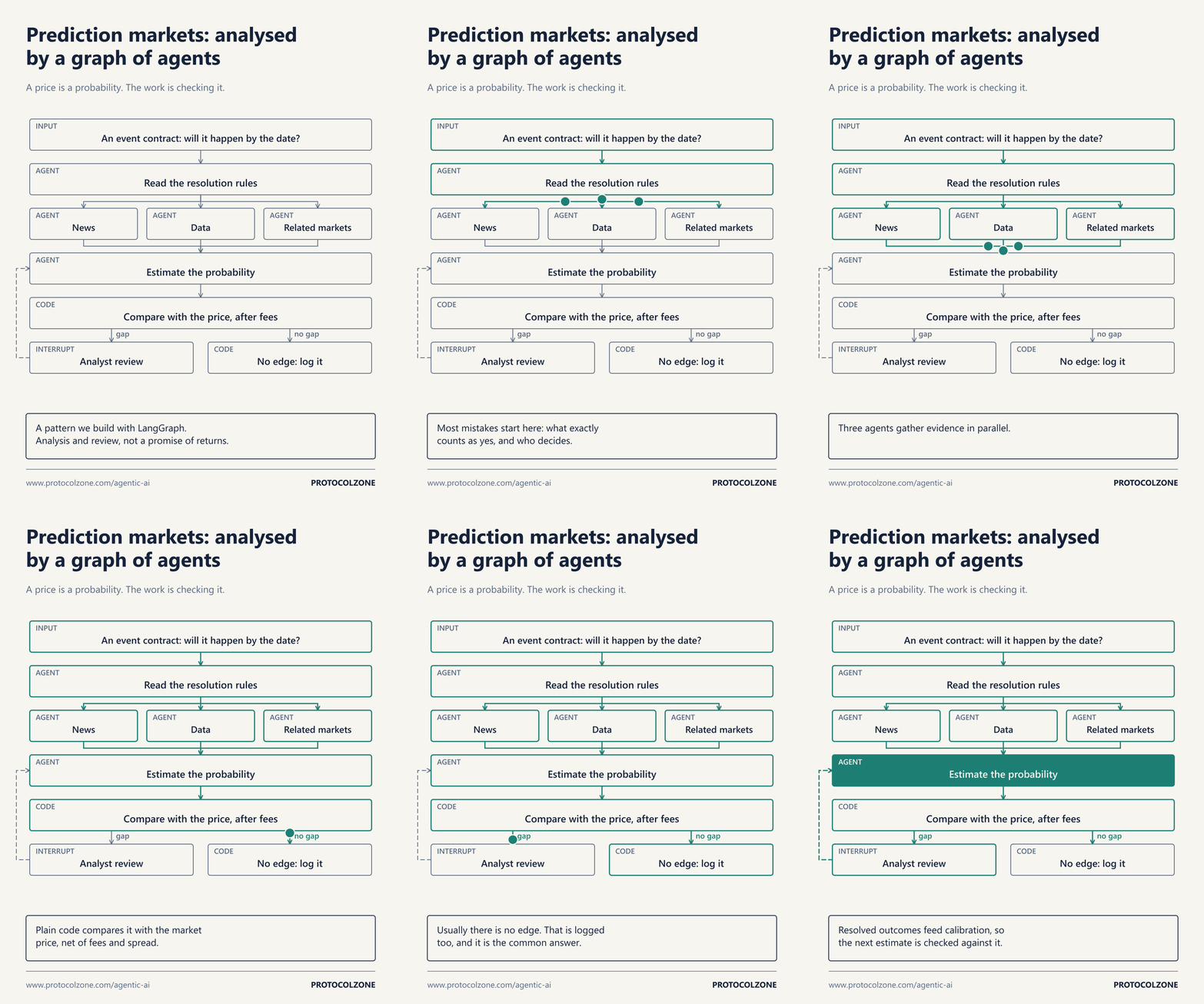
The roles stay the same in every industry: sense, analyse, decide, check, act, learn. The agents inside each role change. The check is always a rule in code or a person.
Being built in AnkEDGE
Data processing, decision making, strategy ordering, adjustment linking, trade placement and hedging as agents, with risk limits in code and results feeding the next run.
The trading agent graphCapability
Resolution rules read first, evidence gathered in parallel, probability compared with the price after fees, analyst review on any gap, and calibration on resolved outcomes.
Prediction market analysisCapability
Price and event feeds in, liability by market analysed, a reprice or suspension proposed, trader limits checked before anything is published.
Live exposure and position analyticsCapability
Session and wallet events read for bonus abuse and safer gambling signals, an intervention chosen and checked against the operator's compliance rules.
Player risk cohorts in one consoleCapability
Claims and documents read, fraud cohort signals checked, a fast track or referral proposed, and an adjuster approving anything outside the rules.
Insurance capabilityCapability
Sensor telemetry read for anomalies and wear, a maintenance plan proposed, a supervisor approving the work order, and the result compared with what failed.
Sensor telemetry and condition monitoring"Capability" means a pattern we build, linked to the delivered work it rests on. It is not a claim of a finished project in that industry.
Agents are only as good as the state they read. The foundations are the work we already deliver: event streams, point in time data, real-time reporting and triggers that turn live events into actions.
Typical stack: LangGraph and LangChain, Python, Kafka, Apache Pinot, Elasticsearch and Kubernetes, with Prometheus and Grafana for monitoring. Models are chosen per node, hosted or open weight.
01
We map the decisions you want organised, who owns each one, the data each needs and the rules that must never bend.
02
A small graph runs on your data alongside the current process, so its decisions can be compared before it acts.
03
The graph goes live with monitoring and replay, our team runs it 24x7, and the next decision is added.
The decision, the data it depends on, who owns it today and the rules it must follow. A short list is plenty.
Your enquiry goes directly to Kartik Modi, our Managing Director, and an engineer replies by email.